2,5-Dimethylpyrazine
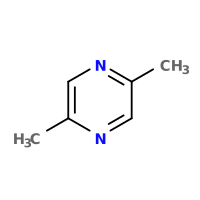
Description
2,5-Dimethylpyrazine is a six-membered heterocyclic alkylpyrazine containing two nitrogen atoms and two methyl groups [358]. It is an important aroma and flavor compound naturally occurring in Oolong tea and various fermented foods, including cocoa beans and soybean-based products such as Thai thua nao and Korean Chungkook-Jiang. It has also been identified as a characteristic predictor of roasted peanut flavor. Biologically, 2,5-dimethylpyrazine is synthesized from L-threonine through a pathway initiated by L-threonine dehydrogenase (TDH), which converts L-threonine to 2-amino-3-ketobutyrate, followed by its conversion to aminoacetone. Two molecules of aminoacetone subsequently condense, either spontaneously or through the action of aminoacetone oxidase (AAO), to form 3,6-dihydro-2,5-dimethylpyrazine, which is further oxidized to 2,5-dimethylpyrazine. Both 2,5-dimethylpyrazine and its intermediate aminoacetone can inhibit microbial cell growth [358].
2,5-Dimethylpyrazine has industrial potential as a food flavoring additive and as a precursor for the synthesis of pharmaceutical compounds with antilipolytic and hypoglycemic activities. Metabolic engineering strategies for its production have focused on reconstructing the biosynthetic pathway in microbial hosts with high L-threonine production capacity. These strategies include screening and overexpressing highly active L-threonine dehydrogenases and introducing water-forming NADH oxidases to maintain an appropriate intracellular NADH/NAD+ ratio, thereby supporting carbon flux while reducing the detrimental effects of excessive reducing equivalents. To alleviate aminoacetone toxicity and enhance its conversion toward the target product, heterologous aminoacetone oxidases can also be introduced. Additional engineering strategies include the use of hypoxia-inducible regulatory elements to modulate precursor transport, including L-threonine symporters, with the aim of increasing precursor availability while mitigating feedback inhibition [358].
Chemical Formula:
C6H8N2
Molecular Weight:
108.14 Daltons
Monoisotopic Mass:
108.068748264 Daltons
SMILES:
CC1=CN=C(C=N1)C
InChI:
1S/C6H8N2/c1-5-3-8-6(2)4-7-5/h3-4H,1-2H3
InChIKey:
Synonyms
- 2,5-DMP
Databases
PubChem (CID):
31252