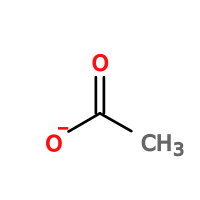
Acetate is a major inhibitory by-product in Escherichia coli cultivations [180, 356, 361], arising from metabolic overflow during growth on glucose [343, 361]. Its accumulation negatively affects cell growth, metabolism, and the production of recombinant or target metabolites, primarily through cytoplasmic acidification and disruption of energy metabolism [180, 361]. Consequently, reducing acetate formation limits carbon loss to overflow by-products, alleviates acetate-associated toxicity, and facilitates high–cell-density cultivation [133, 343].
In Escherichia coli, acetate is predominantly generated from acetyl-CoA via the acetyl-phosphate intermediate through the phosphotransacetylase–acetate kinase (Pta–AckA) pathway encoded by pta and ackA [131]. A secondary acetate-forming route converts pyruvate directly to acetate via pyruvate oxidase, encoded by poxB [156]. Targeted disruption of these pathways reduces acetate accumulation by limiting carbon flux toward its primary biosynthetic routes. Under controlled aerobic conditions, acetate can be reassimilated following glucose depletion [361]. In addition, acetate reutilization can be enhanced by overexpression of acs, which catalyzes the ATP-dependent conversion of acetate to acetyl-CoA, thereby reincorporating residual acetate into central metabolism.
Acetate accumulation is further exacerbated in electron transport chain mutants, where it serves as an alternative sink for pyruvate consumption and substrate-level ATP generation; however, this increased acetate production leads to medium acidification and reduced product yields [356]. Conversely, strains with an inactivated phosphotransferase system (PTS) exhibit significantly reduced acetate accumulation due to decreased glucose uptake and pyruvate formation rates [343].