4-tyrosol
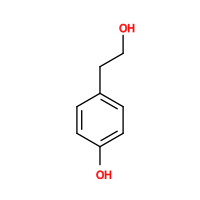
Description
Tyrosol (2-(4-hydroxyphenyl)ethanol) is an industrially valuable phenolic compound used as a fine chemical, a synthon for pharmaceuticals such as betaxolol and metoprolol (β1-adrenergic receptor blockers), a precursor of hydroxytyrosol, and an additive in sake. It also exhibits reported biological activities, including cardioprotective, anti-osteopenic, anti-melanogenic, and anti-inflammatory effects. Although tyrosol occurs naturally in olive oil, wine, and sake, its concentrations are low (e.g., ~25 mg·kg−1 in virgin olive oil). Consequently, tyrosol can be produced by metabolic engineering in Escherichia coli from glucose or tyrosine via a pathway involving tyrosine decarboxylase, tyramine oxidase, and endogenous alcohol dehydrogenase [355].
Chemical Formula:
C8H10O2
Molecular Weight:
138.166 Daltons
Monoisotopic Mass:
138.0680795652 Daltons
SMILES:
C1(C(=CC=C(C=1)O)CCO)
InChI:
1S/C8H10O2/c9-6-5-7-1-3-8(10)4-2-7/h1-4,9-10H,5-6H2
InChIKey:
Synonyms
- p-hydroxyphenylethanol
- 2-(4-hydroxyphenyl)ethanol
- tyrosol
Databases
MetaCyc:
CPD3O-4151
MetaboLights:
MTBLC1879
HMDB:
HMDB04284
ChemSpider:
9964
ChEBI:
1879
PubChem (CID):
10393
KEGG:
C06044
RefMet:
Tyrosol
Seed:
cpd03597
MetaNetX:
MNXM4964