Rosin is a cinnamyl alcohol glucoside that is one of the major active ingredients found in the rhizomes of the medicinal herb Rhodiola rosea, commonly known as golden root. It belongs to the class of rosavins, alongside rosavin and rosarin. Structurally, rosin is composed of cinnamyl alcohol conjugated to a glucose moiety, which can serve as a scaffold for further modifications, such as the addition of an arabinopyranose or arabinofuranose unit to form rosavin or rosarin, respectively. Rosin exhibits multiple biological properties, including antioxidative, neurostimulant, and cardioprotective activities [283].
The de novo microbial biosynthesis of rosin from simple carbon sources is achieved by reconstructing and optimizing both the upstream precursor pathway and the downstream heterologous glucosylation pathway. First, cinnamyl alcohol is synthesized from phenylalanine via sequential enzymatic transformations catalyzed by phenylalanine ammonia-lyase (PAL), hydroxycinnamate:CoA ligase (4CL), cinnamyl-CoA reductase (CCR), and alcohol dehydrogenase. Glucosylation of cinnamyl alcohol to form rosin is subsequently achieved by introducing UDP-glucosyltransferase (UGT) gene. To enhance the precursor supply for rosin biosynthesis, genetic modifications are implemented to overproduce phenylalanine; these include the deletion of the transcriptional regulatory gene tyrR to alleviate feedback control, alongside the knockout of the key genes tyrA and trpE to block competing pathways leading to tyrosine and tryptophan biosynthesis [284].
rosin
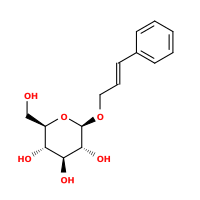
Description
Chemical Formula:
C15H20O6
Molecular Weight:
296.31 Daltons
Monoisotopic Mass:
296.12598835 Daltons
SMILES:
C1=CC=C(C=C1)/C=C/CO[C@H]2[C@@H]([C@H]([C@@H]([C@H](O2)CO)O)O)O
InChI:
1S/C15H20O6/c16-9-11-12(17)13(18)14(19)15(21-11)20-8-4-7-1 0-5-2-1-3-6-10/h1-7,11-19H,8-9H2/b7-4+/t11-,12-,13+,14-,15-/m1/s1
InChIKey:
Synonyms
- Cinnamyl alcohol glucoside