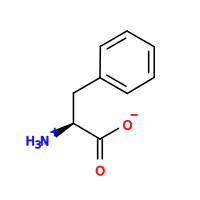
L-Phenylalanine is an aromatic amino acid that is essential for cell growth. It is synthesized through the aromatic amino acid biosynthetic pathway (shikimate pathway), which originates from the central carbon metabolites phosphoenolpyruvate and erythrose-4-phosphate. In this pathway, chorismate serves as a versatile intermediate that can be converted into L-phenylalanine through the action of prephenate dehydrogenase, encoded by the pheA gene [182]. Additionally, L-phenylalanine serves as a biological precursor for the synthesis of aromatic amines and hydroxycinnamic acids [360]. L-phenylalanine also acts as an allosteric regulator by exerting feedback inhibition on 3-deoxy-D-arabino-heptulosonate-7-phosphate (DAHP) synthase, encoded by aroG, which catalyzes the first step of the common aromatic amino acid biosynthetic pathway [12].
L-Phenylalanine represents a major branch point in the shikimate pathway, creating metabolic competition for the precursor chorismate during the biosynthesis of other aromatic compounds, such as L-tryptophan [182]. Because L-phenylalanine is essential for cell growth, complete inactivation of its biosynthetic pathway through deletion of pheA is undesirable, as it severely impairs cellular growth [182]. To optimize metabolic flux in microbial hosts without compromising growth, several strategies have been developed:
- Transcriptional attenuation of pheA: The expression of pheA can be controlled using CRISPR interference (CRISPRi) systems, allowing its repression to be modulated after an initial growth phase and thereby balancing cellular growth with L-phenylalanine production [182].
- Replacement of the native pheA promoter: The native promoter of pheA can be replaced with a self-regulated promoter, such as the flagellar-associated promoter PfliC, to dynamically control L-phenylalanine biosynthesis and balance cell growth with target product synthesis [182].
- Overexpression of feedback-resistant DAHP synthase: Feedback inhibition can be relieved by overexpressing variants of DAHP synthase that are resistant to L-phenylalanine inhibition, such as AroGA146N, thereby increasing flux through the entry point of the common aromatic amino acid biosynthetic pathway [12].