Squalene is a linear unsaturated C30 triterpene hydrocarbon (C30H50) that serves as a key lipid intermediate in the biosynthesis of sterols in eukaryotes, hopanoids in bacteria, and cholesterol, steroid hormones, and bile acids [39, 47, 49]. In bacteria, it contributes to membrane stability and the formation of lipid rafts [39]. Moreover, squalene exhibits direct antioxidant activity by scavenging reactive oxygen species and free radicals, and has been associated with cardioprotective and radioprotective effects [49]. In most organisms, squalene is synthesized from two molecules of farnesyl diphosphate through a two-step reaction catalyzed by squalene synthase. The first step involves the condensation of two FPP molecules to generate the intermediate presqualene pyrophosphate (PSPP), followed by an NADPH-dependent reductive rearrangement that produces squalene, [38, 39, 42]. Alternatively, certain bacteria employ a three-step biosynthetic pathway mediated by the hpnC, hpnD, and hpnE genes, in which HpnD synthesizes PSPP, HpnC converts PSPP into hydroxysqualene (HSQ), and the flavin-dependent enzyme HpnE reduces HSQ to squalene [39]. In downstream metabolic pathways, squalene is oxidized by squalene epoxidase to form 2,3-oxidosqualene, the universal precursor of phytosterols and ginsenosides in plants and ergosterol in yeasts [1, 49].
Squalene has considerable commercial value as a moisturizer in the cosmetic industry and as a vaccine adjuvant that enhances immune responses, driving the development of sustainable biotechnological alternatives to its traditional extraction from the liver oil of deep-sea sharks [47, 49]. In recombinant Saccharomyces cerevisiae, strategies to enhance squalene production primarily rely on the overexpression of mevalonate pathway genes, particularly the truncated HMG-CoA reductase (tHMG1), which lacks regulatory domains and is therefore insensitive to ergosterol-mediated feedback inhibition, together with isopentenyl diphosphate isomerase (IDI1), farnesyl diphosphate synthase (ERG20), and squalene synthase (ERG9) [47, 49]. Because squalene biosynthesis requires substantial reducing power, co-overexpression of tHMG1 with genes involved in NADPH regeneration in the cytosol (ZWF1) or mitochondria (POS5) markedly increases squalene yields through a synergistic enhancement of cofactor availability [47]. However, excessive intracellular accumulation of squalene can be cytotoxic and impair cell growth, while also activating regulatory mechanisms that synergistically repress competing metabolic pathways, resulting in a pronounced reduction in ethanol production and in the transcription of fermentation-related genes (PDC5, ADH1, ADH2, ADH4, ADH5, and ADH7), as well as genes involved in the post-squalene pathway (ERG1, ERG7, ERG25, ERG26, ERG27, ERG5, ERG11, and ERG24) [47, 49]. Finally, squalene serves as the central precursor for reconstructing complex heterologous biosynthetic pathways aimed at producing ginsenoside aglycones in microbial hosts [1, 48].
squalene
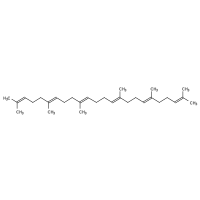
Description
Chemical Formula:
C30H50
Molecular Weight:
410.725 Daltons
Monoisotopic Mass:
410.391251605 Daltons
SMILES:
CC(C)=CCCC(C)=CCCC(C)=CCCC=C(C)CCC=C(C)CCC=C(C)C
InChI:
1S/C30H50/c1-25(2)15-11-19-29(7)23-13-21-27(5)17-9-10-18-28(6)22-14-24-30(8)20-12-16-26(3)4/h15-18,23-24H,9-14,19-22H2,1-8H3/b27-17+,28-18+,29-23+,30-24+
InChIKey:
Synonyms
- 2,6,10,15,19,23-hexamethyltetracosa-2,6,10,14,18,22-hexaene
- Spinacene
- Supraene
- SQ
Databases
MetaCyc:
SQUALENE
RefMet:
Squalene
MetaboLights:
MTBLC15440
HMDB:
HMDB00256
LIPID MAPS:
LMPR0106010002
ChEBI:
15440
KEGG:
C00751
CAS:
111-02-4
PupChem (SID):
4013
CHEMBL:
CHEMBL458402
LIPIDBANK:
SST0122
KNApSAcK:
C00003755
PDB-CCD:
SQL
3DMET:
B00166
NIKKAJI:
J5.103I
Reactome:
191269
Seed:
cpd00559
MetaNetX:
MNXM292
BiGG:
sql